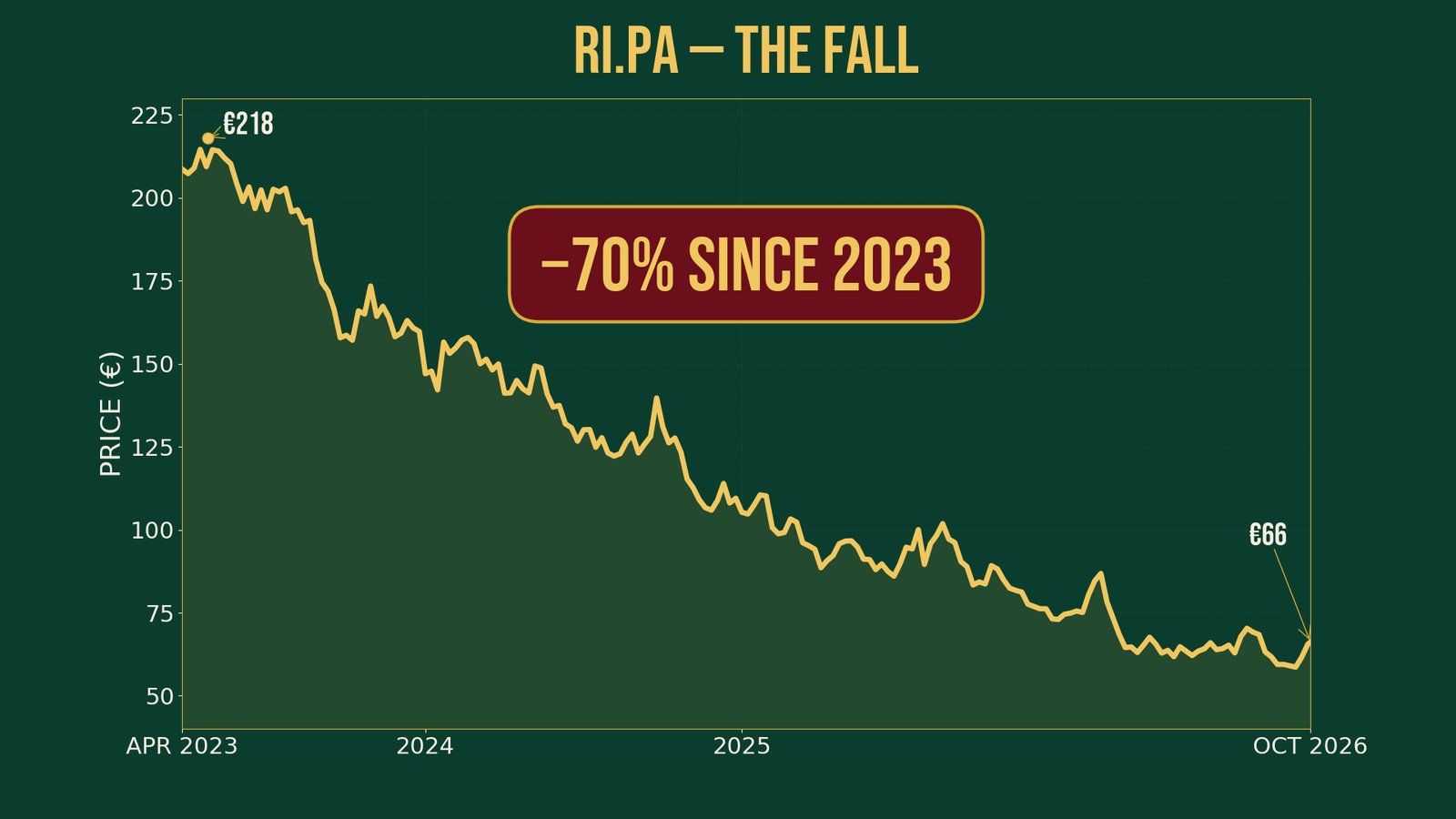
Pernod Ricard is down 70% from its 2023 peak. The dividend never moved. A close look at the family-controlled spirits empire the market has left for dead.
Disclaimer: The content in this post is strictly for educational and entertainment purposes only and does not constitute formal financial, legal, or tax advice. I am not a licensed financial advisor or certified professional. Stock picking and trading carry substantial risk of capital loss; past performance does not guarantee future results. Always conduct your own independent research or consult a qualified professional before making any investment decisions.
AI disclosure: This article was created using AI assistance for both content and research. The content is AI drafted from primary sources only, including company filings and published financial data, except where a secondary source is explicitly cited, then put through human verification and significant editing before publication, with the figures checked against the source documents, and the judgments, positions, and text finalized by me. If the use of AI offends you, stop now. We attempt to use AI openly and responsibly.
Position disclosure: I own Pernod Ricard, held as its US-listed ADR (PRNDY) — a long position, bought with my own money. I wrote this article myself, and it expresses my own opinions. No company mentioned here pays me anything, and I have no business relationship with any of them. I may buy more, or sell part or all of the position, at any time after publication, without updating this post — so read this as where things stood on the day it was published, not a live feed of my portfolio.
When was the last time you bought liquor at a 70% discount? Pernod Ricard‘s stock has fallen 70% since 2023, and the dividend — now yielding about 7% — hasn’t moved. The portfolio is a bar shelf of iconic brands, and I own shares in it myself. This is a close look at the family-controlled spirits empire the market has left for dead.
Welcome to The Fine Ants Hill — the Compounding Colony. No hype, no gurus: just plain numbers and honest math. The disclosures above cover the formalities; the short version is that I own this stock, so what follows is why I bought it, and the one thing that would make me sell.
The Short Version
- The thesis: a family-controlled, wide-moat spirits group down ~70% from its 2023 peak — with the €4.70 dividend untouched.
- The number that matters: at ~€66 the yield is ~7%; the strain sits in net debt at 3.7× EBITDA, up from 3.3× a year ago.
- What would make me sell: honestly, almost nothing — maybe a 100% pop, and even then I’d think twice. Full reasoning in The verdict.
A time company, not a drinks company
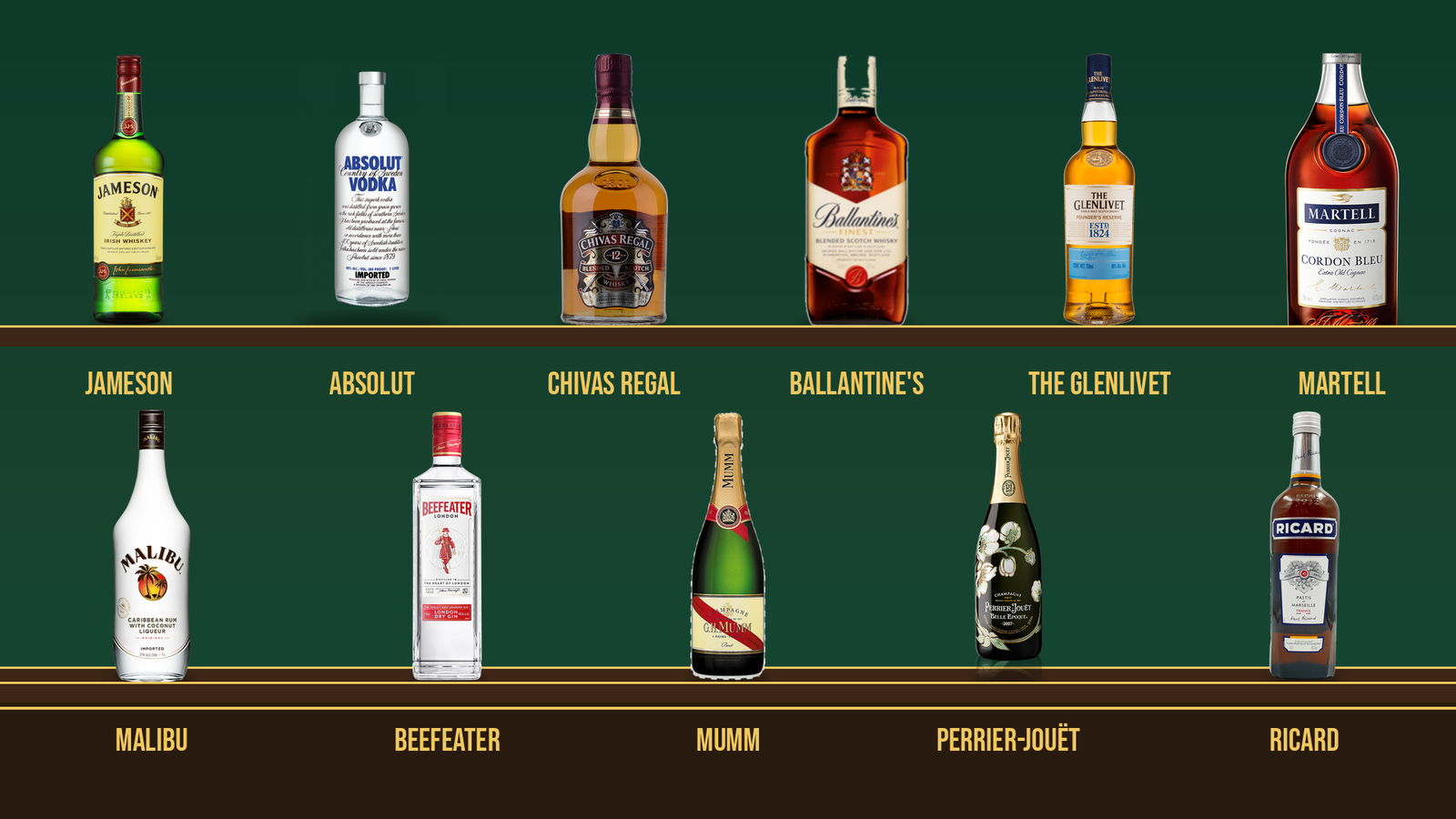
Pernod Ricard is the second-largest spirits group on the planet, and a member of France’s CAC 40. The portfolio reads like a bar shelf: Jameson, Absolut, Chivas Regal, Ballantine’s, Glenlivet, Martell, Malibu, Beefeater, Mumm, Perrier-Jouët, and Ricard itself — the pastis the whole company is named after.
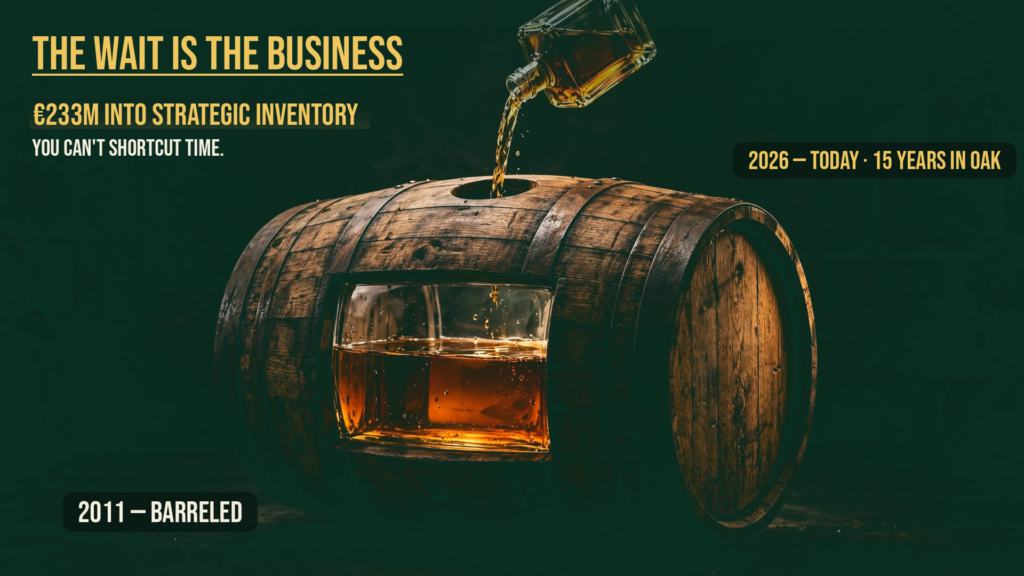
The point most readers miss is that this is not really a drinks company like Coca-Cola. It is a time company. A fifteen-year-old Chivas cannot be manufactured faster — you cannot disrupt aging. Every bottle of whisky and cognac sold today was put into a barrel a decade or more ago, at a cost no startup can shortcut. Morningstar calls it a wide-moat business, and the moat is literally made of oak and patience: €233 million was added into strategic inventory last year — barrels just sitting there, getting more valuable.
And it is still a family affair. The Ricard family, acting in concert through Société Paul Ricard and its family vehicles, holds about 15% of the capital and over 21% of the votes — France’s double-voting-rights system rewards patient holders. The chairman and CEO is Alexandre Ricard. When the family name is on the building, the reputation and the dividend tend to be sacred.
The numbers
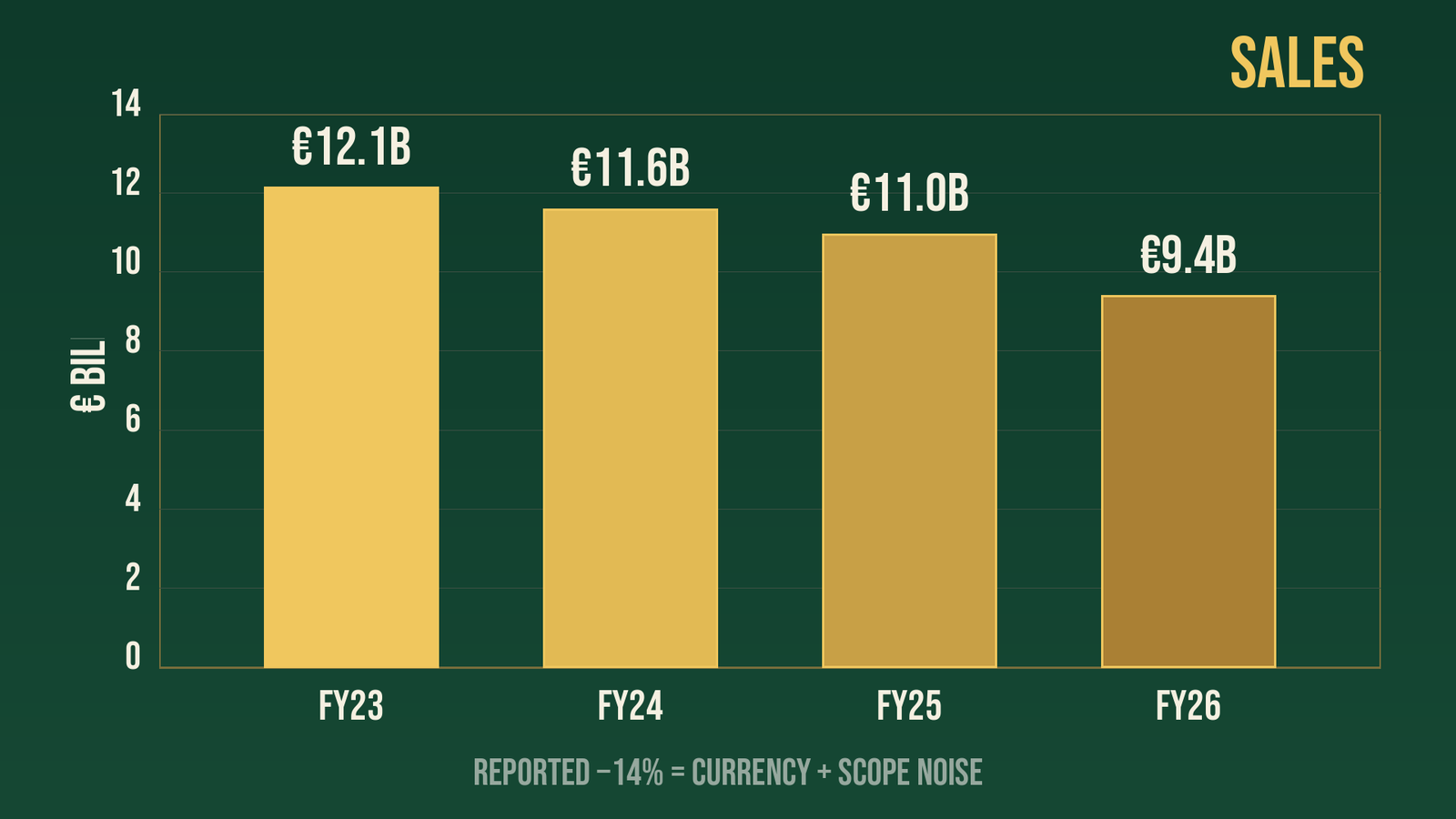
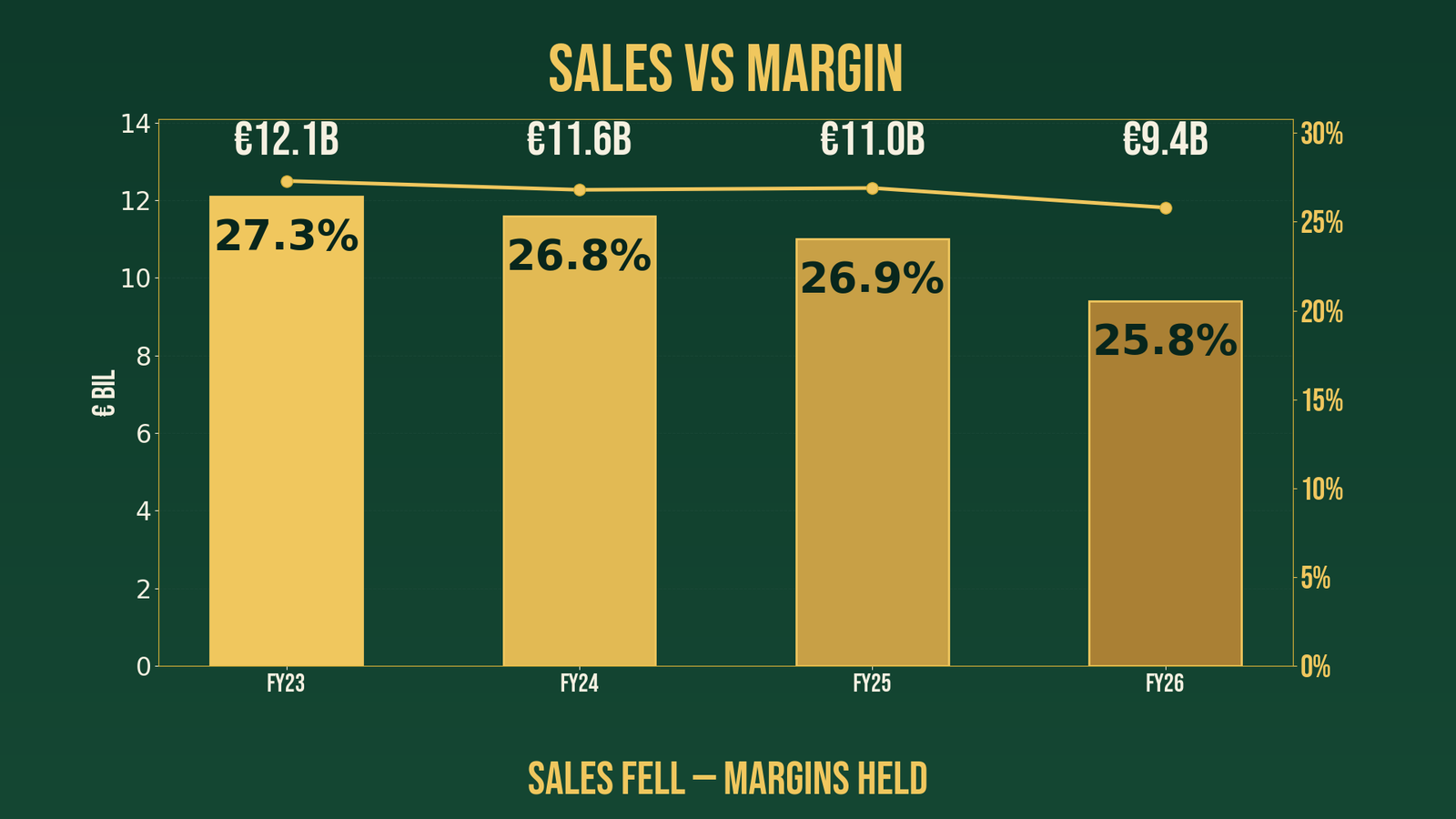
Fiscal 2026 sales were €9.4 billion — down 3.9% on an organic basis. The reported figure looks worse, at −14%, but that includes currency fluctuations and brands bought or sold during the year.
The remarkable part is the margin. In a year when sales shrank, the operating margin held at 25.8%, down 1.1 points from the year before, and defended hard through the downturn. That is the premiumization machine working: when volumes fall, the mix gets richer, and a €1 billion efficiency programme did the rest. Twenty-six cents of operating profit on every euro of sales, in a bad year. These figures are more intoxicating than their products.
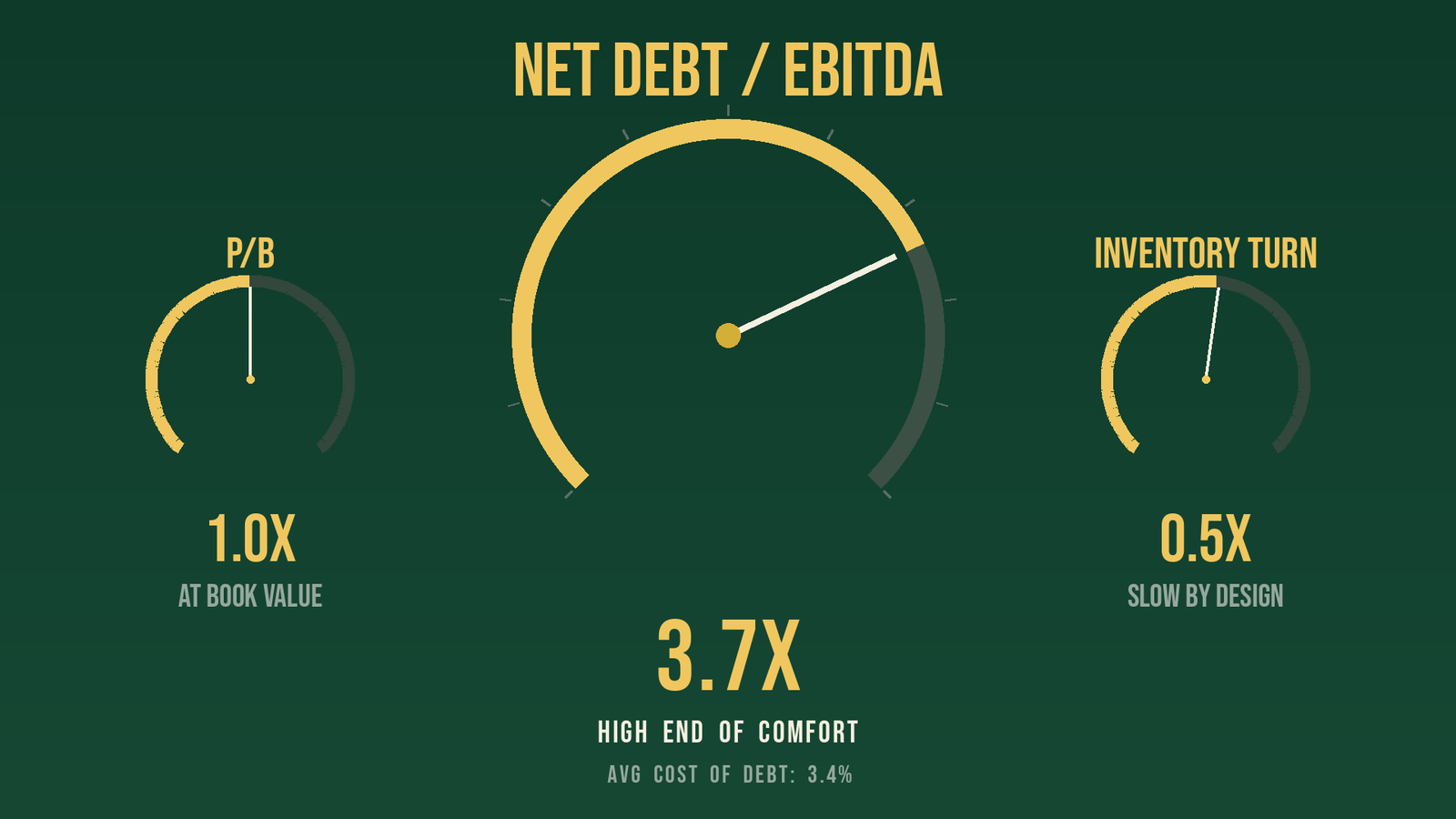
The balance sheet and debt are the hangover. Net debt sits at 3.7× EBITDA, up from 3.3× a year ago, because earnings fell faster than the debt did. That is the high end of comfort: not distress, but the receipt for years of buybacks and acquisitions. The average cost of that debt is only 3.4%, so it can be carried, but flexibility now comes out of capex and deal budgets.
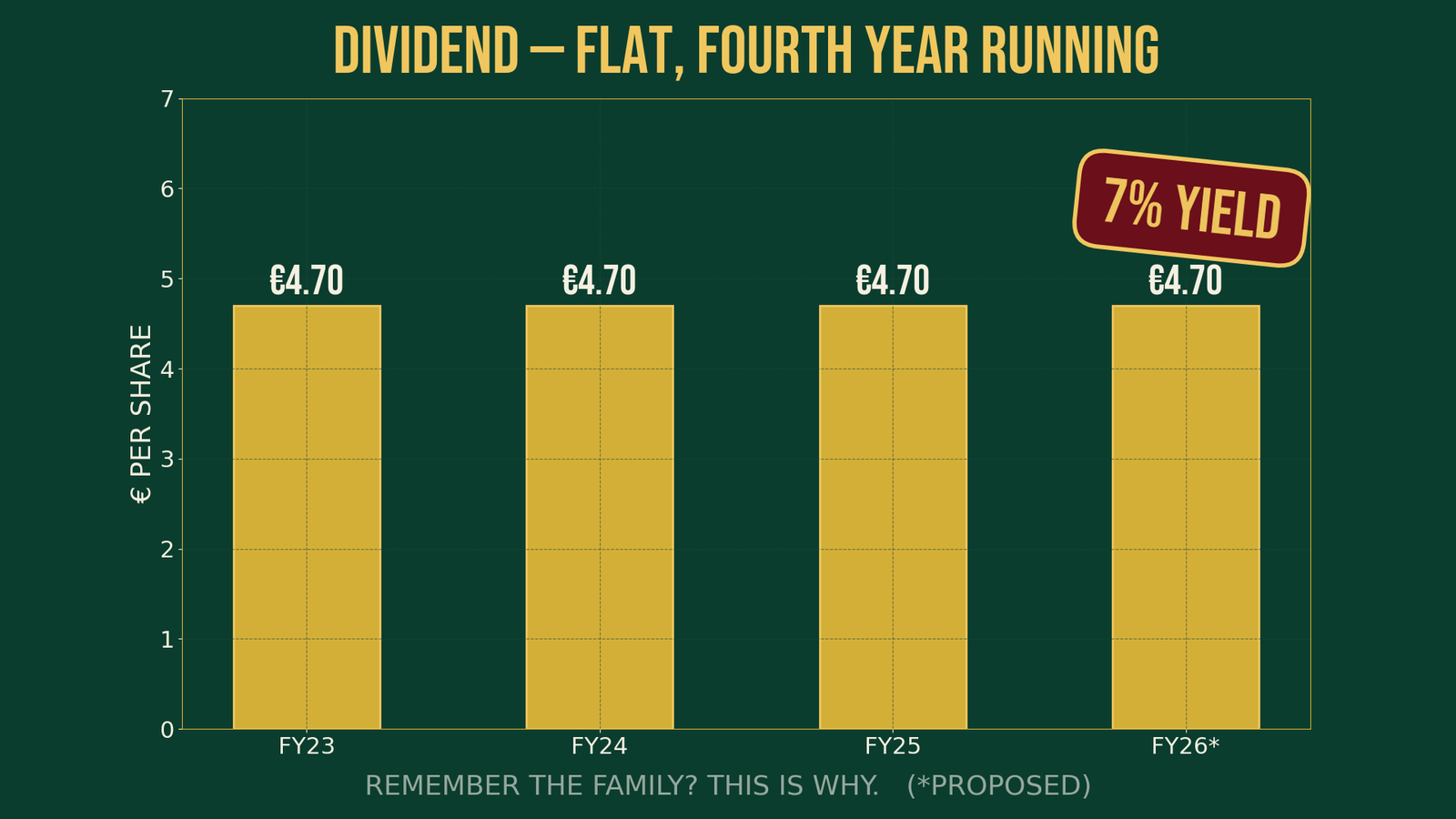
And then there is the dividend: €4.70 a share, held flat for the fourth year running. This year’s is proposed, and goes to the shareholder vote in November. Zoom out ten years and it has climbed from €1.88 to €4.70 — the flat stretch is the exception, not the rule. At today’s price near €66, that is a yield of about 7%. The market has taken 70% off the price while the dividend hasn’t moved.
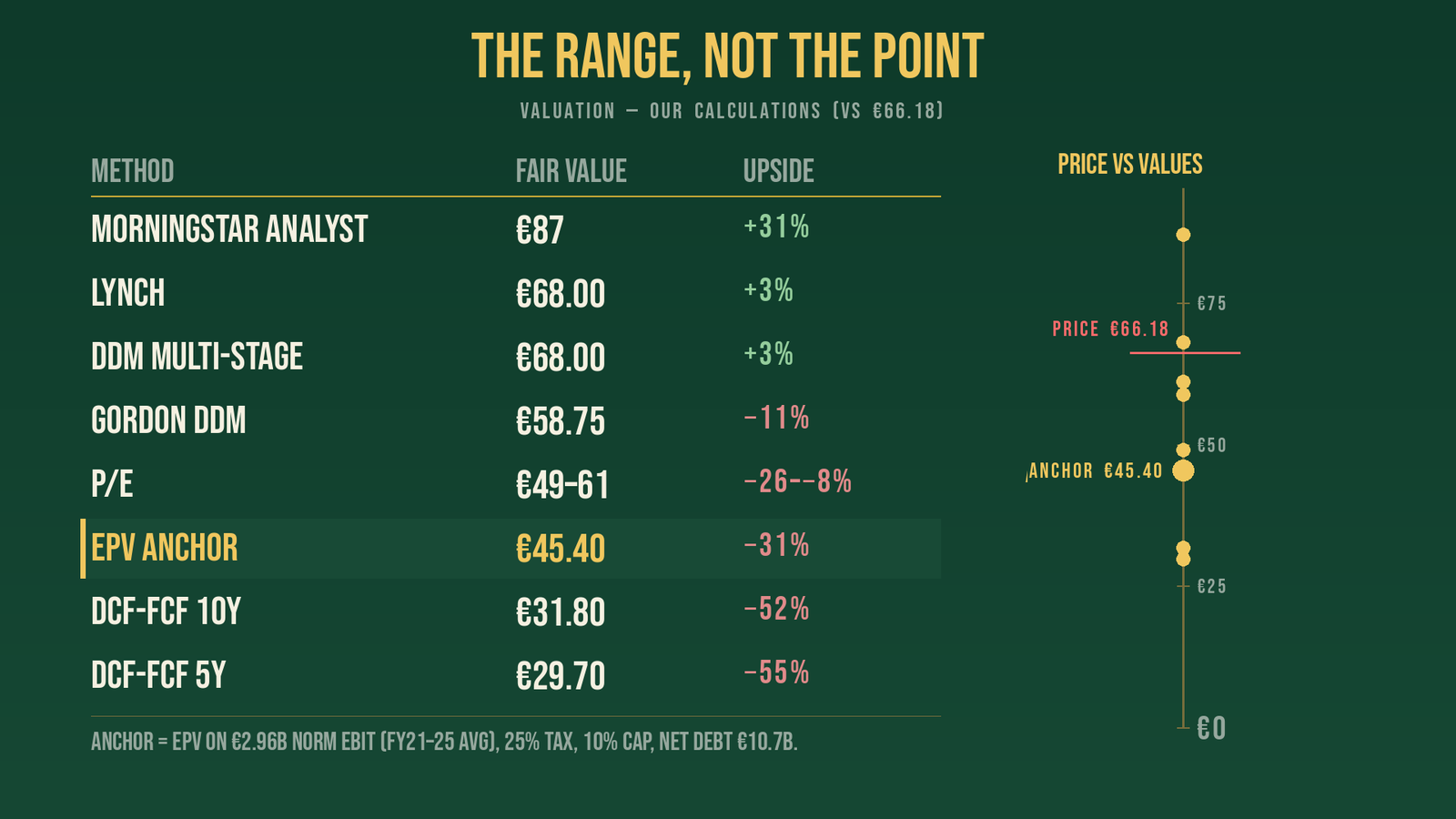
The shares trade at about 10× normalized earnings, just under 14× last year’s reported earnings per share, and just over 11× recurring. Morningstar’s analyst, who cut her fair value from €96 to €87 back in June, still sees roughly 30% upside from here, with a four-star rating. My own valuation sheet is more mixed: anywhere from €30 on a harsh cash-flow read to €68 on a kind one, with Morningstar above all of those at €87. The range matters more than any single number.
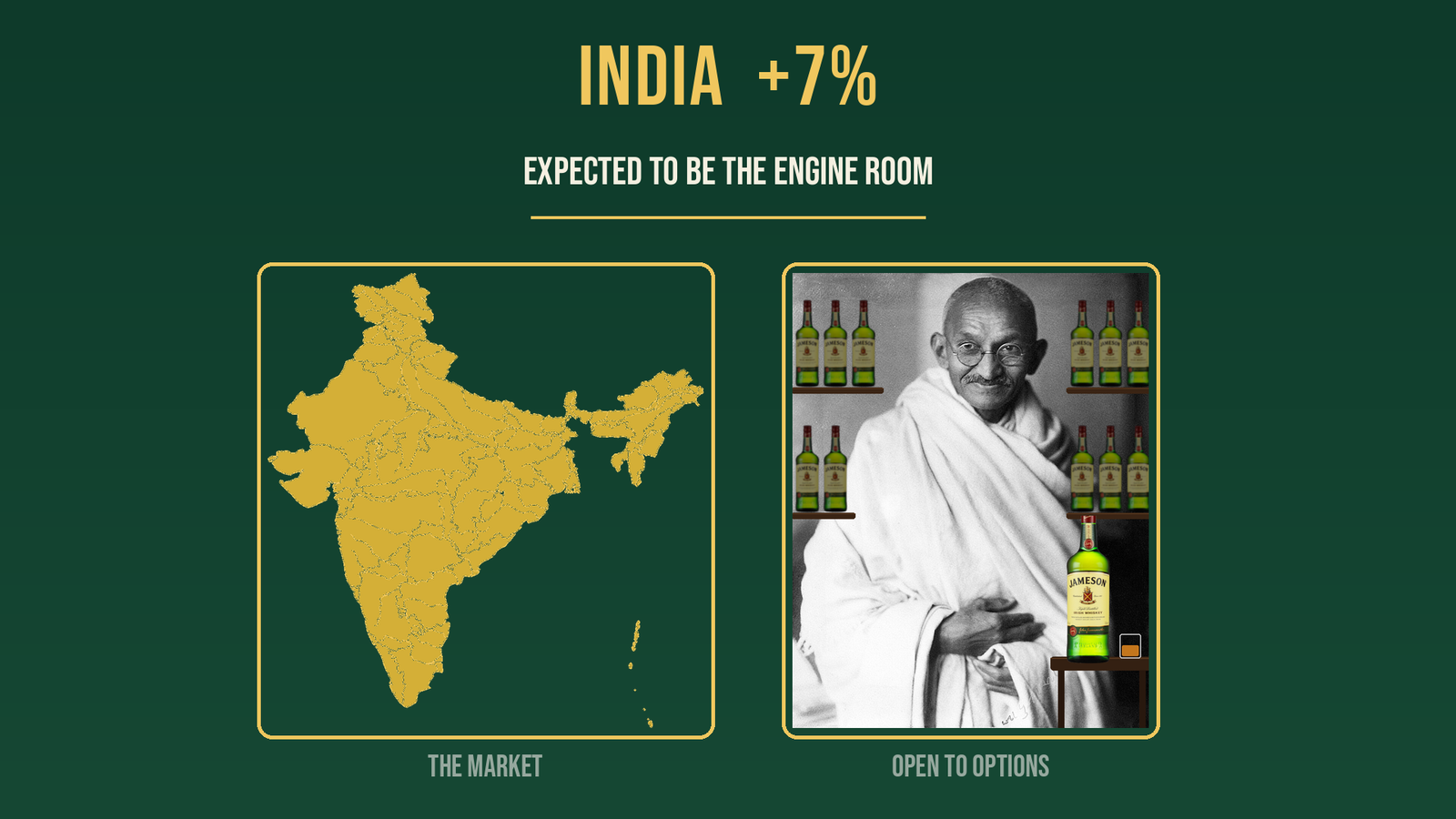
One more bright spot worth mentioning: India grew 7% last year. In a downturn, India is expected to be the engine room behind this booze cruise.
The bear case: four flags driving the sell-off
One: China. Sales there fell 19% — and this isn’t just a weak consumer. Anti-dumping duties of up to 35% now apply to European cognac, which is regulatory, and regulations can stick around long after cycles turn. Pernod itself is currently exempt, under minimum-price commitments with Beijing — but the exemption is conditional, the wider category is taxed, and demand has been hit regardless.
Two: the United States, down 14% — a weaker consumer, amplified by distributor destocking and tariff uncertainty. In August, management guided outright that US and China sales will fall again next year, with only low-end growth promised through FY29. YEARS of repair, guided by the company itself.
Three: leverage. 3.7× EBITDA means the dividend is the fixed commitment and everything else bends around it. If things get worse before they get better, buybacks and deals stop; the company’s historic growth levers go quiet.
Four: the long, slow question — younger drinkers are drinking less, and Ozempic and its cousins are changing appetites. The analysts call the drag cyclical; honestly, nobody knows how much is cycle and how much is culture. Premiumization has masked volume declines for a decade.
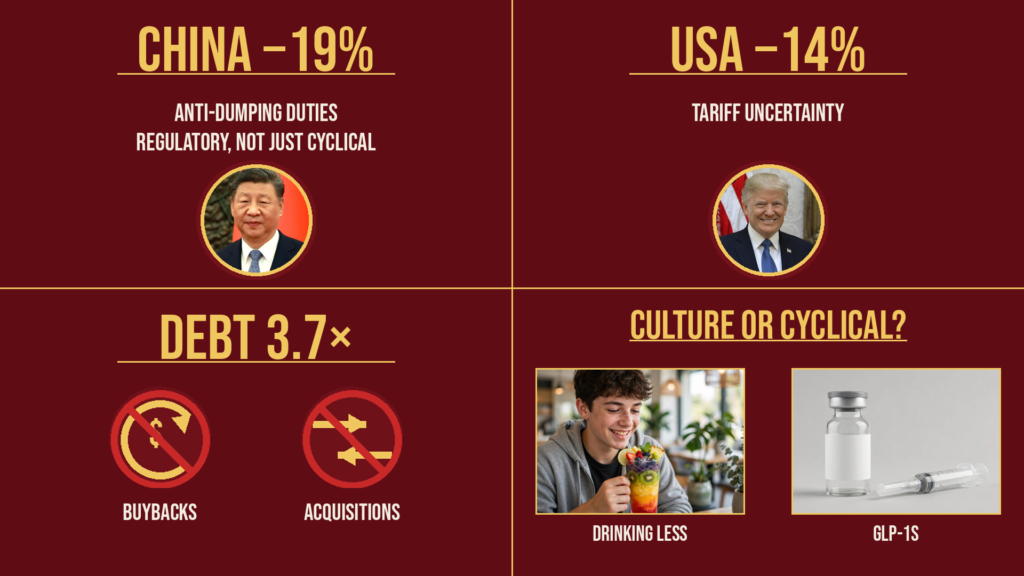
None of the four flags is hidden — arguably they’re already reflected in the €66 share price.
The verdict
Wonderful business, bombed-out price — with genuinely open questions about when the turn comes. This is not a compounder you buy for next quarter. It is a family-controlled, wide-moat franchise paying you 7% a year to wait for the cycle to turn.
I bought it because the math cleared my bar:
- a low-double-digit multiple on depressed earnings
- a 7% yield paid under a policy that targets a payout of about half of recurring profits — though holding the dividend flat this year pays out closer to 80% of those profits, which can’t last forever
- a dividend held flat through four ugly years
- and a family with 21% of the votes who cherish that dividend as much as I do.
What would make me sell? Honestly — nothing. Maybe a 100% pop in the price, and even then I’d think twice.
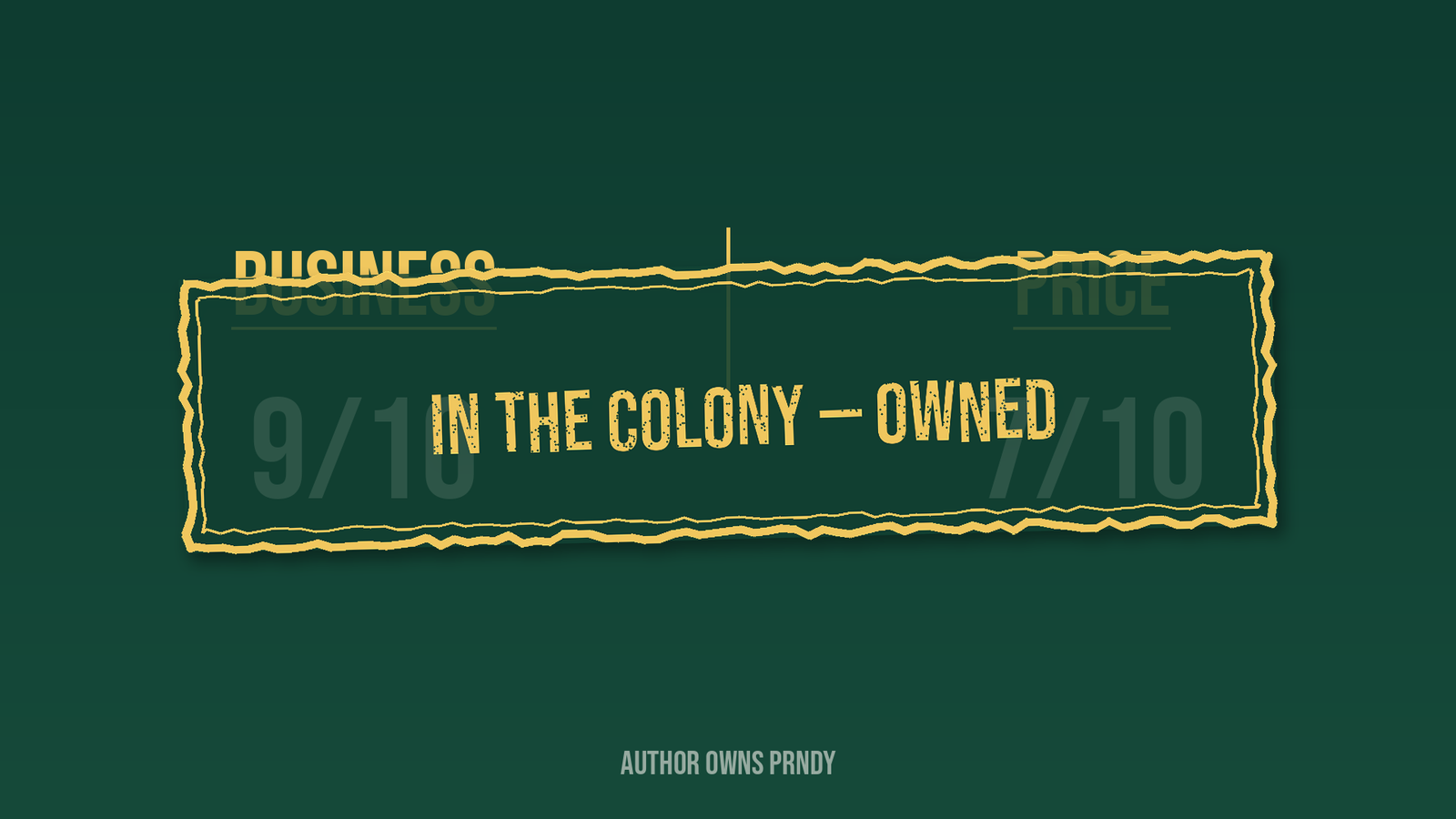
My scorecard: business, 9 out of 10. Price, 7 out of 10. The verdict: it’s in the colony. I already own it, and I’m not selling.
For American readers: how to buy in
If you’re reading this from the United States, you’re probably wondering how to buy a French stock at all. This part confuses everyone, so here it is plainly.
An ADR — an American Depositary Receipt — is just a US-traded wrapper around foreign shares. A bank holds the real Paris-listed shares and issues dollar-denominated receipts that trade in your normal brokerage account. No French brokerage, no euros, no drama.
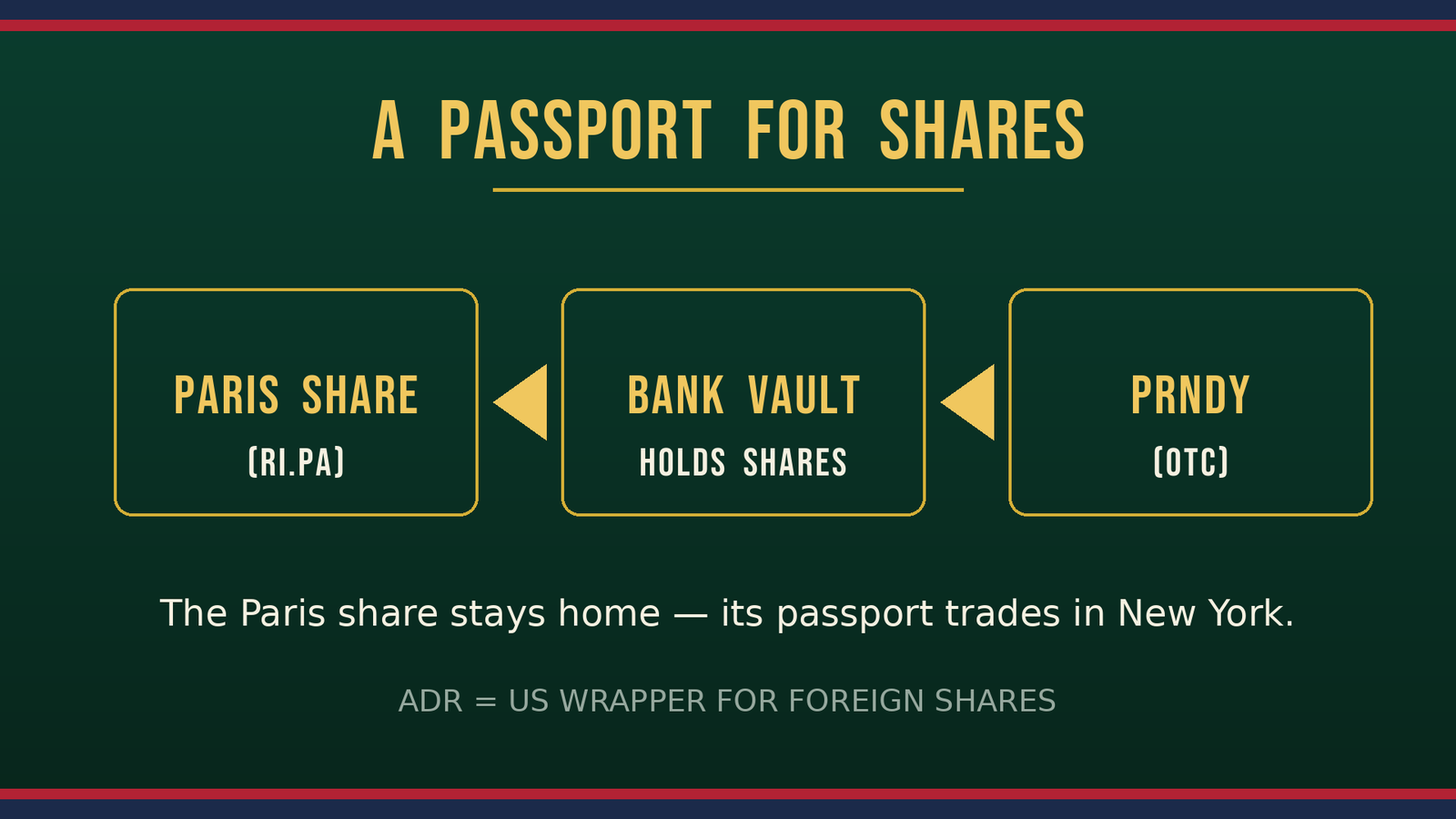
Pernod Ricard’s ADR trades over the counter under the ticker PRNDY. It’s sponsored directly by the company and the ratio is five ADRs to one Paris share. So at around $14.65, each ADR is roughly a fifth of a €66 share and the dividends flow straight through to you.
Three honest caveats before you buy. One: it trades over-the-counter, or OTC, so it’s thinner than the Paris listing with wider spreads, less volume. If your broker offers international trading, buying RI.PA directly in Paris is an option, but dollars will have to be converted to euros before trading. Two: France withholds tax on the dividend — typically 15% under the US-France treaty — plus a small annual depositary fee. So that 7% yield is really a bit over 6% in an American account. Still handsome, just know the fees and taxes before you count your returns. Three: Given the OTC status, your broker will likely charge a commission for execution.
Join the colony
That’s Pernod Ricard: oak, patience, and a 7% yield the market doesn’t believe in. If this was useful, join the Compounding Colony, subscribe below and get the next teardown in your inbox.
Coming soon, we will start the series this site was built for: $10,000 in the index against $10,000 in my own picks, head to head. And if there’s a stock you want me to tear down next, say so in the comments.
Education, not financial advice — and remember, I own this one.
One question for the colony: would you hold a 7% yielder carrying 3.7× leverage while its two biggest markets shrink? Tell me in the comments — I read every one.
I read filings for fun and buy the stocks nobody wants: out-of-favour, family-controlled, paying real dividends. Every teardown shows its work — and my own position, disclosed in the open.
Sources & Filings
- Pernod Ricard — FY26 Full-Year Sales and Results, press release, 27 Aug 2026 (sales, margin, regions, debt, dividend proposal)
- Pernod Ricard — FY26 Financial Communication, presentation, 27 Aug 2026 (margin bridge, strategic inventories, leverage)
- Pernod Ricard — Annual Shareholders’ Meeting release, 27 Oct 2025 (dividend approval history)
- Citibank Depositary Receipt Services — PRNDY programme, CUSIP 714264207 (ADR ratio, dividend pass-through, fees)
- Morningstar analyst research — fair value €87, four-star rating (secondary source, cited inline where used)
- Share prices — RI.PA (Euronext Paris) and PRNDY, as of 14 Oct 2026
Share prices as of 14 October 2026. Pernod Ricard reports Q1 FY27 sales on 15 October — this post will be revised once they land.